A Chinese went on safari in Kenya and Now lions are his life
A Chinese went on safari in Kenya and Now lions are his life. He is a employee for Zhuo Qiang and a Chinese wildlife conservationist.
He has also spent the last 14 years caring for them and other wild animals at Kenya’s renowned Maasai Mara National Reserve.
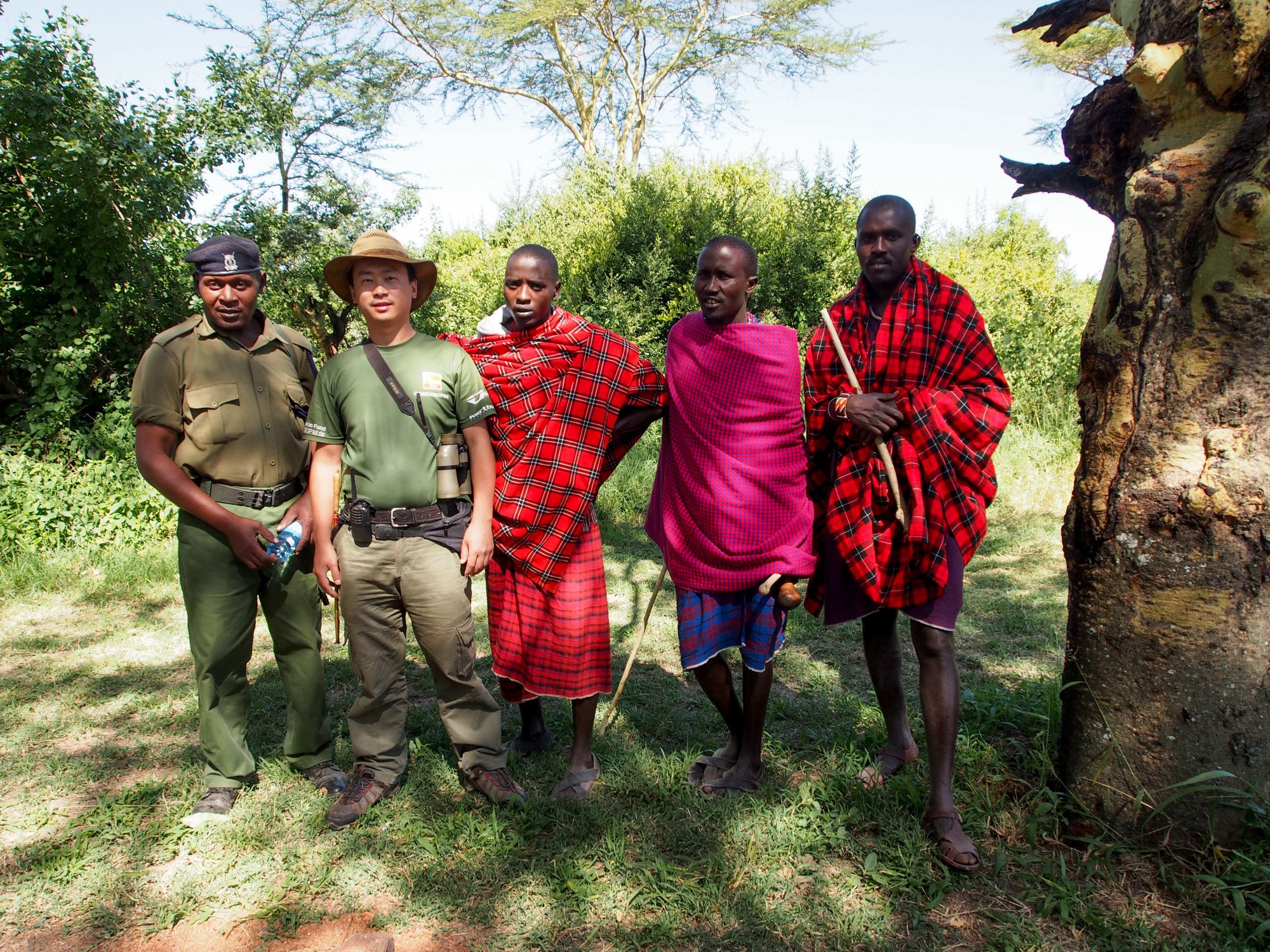
During his tenure at the reserve in Narok, a county in southwest Kenya, Zhuo, also known locally as Simba, which means “lion” in Swahili, has collaborated with the Maasai population to conserve wildlife and lessen hostilities between people and animals.
And he hopes other Chinese people would follow suit.
It is my sincere wish that more Chinese conservationists will move here and establish themselves.
However, Zhuo noted that “more Chinese communities are supporting our work” despite the fact that “so far, nobody.”
After holding the inaugural China-Kenya Wildlife Conservation Cooperation Forum last month, Zhuo, 50, may soon attract additional attention.
The event, which drew hundreds of Chinese individuals and companies, was intended to highlight the work being done and look into ways to offer assistance.
“We have established a platform to motivate and inspire Chinese communities residing in Kenya, along with Chinese visitors to Kenya, to participate in our conservation endeavours,” Zhuo stated at the Nairobi gathering.
Numerous Chinese businesses, including those in real estate and logistics, donated money at the meeting to help with those initiatives.
The Kenya Overseas Chinese Association’s head, Gao Wei, stated that the organisation will encourage Chinese companies and individuals living in Kenya to contribute to conservation efforts.
Gao stated to the event, “We are looking at how we, the Chinese, can do something for society [in Kenya] in the area of conservation.”
Kenya is well-known for its wildlife, which draws tourists from all over the world. We think it will benefit Kenya if we can encourage greater animal conservation there.
Zhuo’s expedition to conserve wildlife in Africa began in 2004 when he first travelled to the picturesque Maasai Mara savannah plains and beheld a pride of lions. The vacation changed my life.
“I watched the King of the Jungle TV animation when I was eight years old.
Following that, Zhuo remarked, “I started having dreams of turning into a lion and travelling to Africa to live among lions.
Zhuo left the Chongqing administration after working there for fifteen years after witnessing the lions in Kenya. “I took my rucksack and moved to Africa,” he declared.
He spent several years living with lions in the reserve while he searched for the most effective way for people and lions to coexist peacefully.
He became aware that there were only 20,000 lions left in the world, making them an endangered species. Under 3,000 were in Kenya.
“My goal is to motivate Chinese people to participate with me in these conservation efforts and to inspire Kenyans to protect lions,” Zhuo stated.
In order to secure funding for the preservation of lions and other wild creatures in Maasai Mara, he established the Mara Conservation Fund in 2011.
A year later, he established a camp in the about 73 square kilometre (28 square mile) Ol Kinyei Conservancy within the reserve.
This is “the first community-based conservancy in Maasai Mara,” according to Zhuo, and it involves about 1,200 families.
In order to create protected areas for the environment and wildlife, Zhuo claimed to have persuaded them to donate land.
Together with selling goods they produce to visitors, they get a portion of the conservancy’s visitor entry costs.
“The annual income of families in the local community has increased from US$500 to US$3,700 per family,” he revealed.
After learning from our model, a large number of people returned to establish more conservancies near Maasai Mara.
Zhuo refers to this as “the first community-based conservancy in Maasai Mara,” with about 1,200 families participating.
Zhuo claimed to have persuaded them to donate land in order to create protected spaces for the natural world and wildlife.
sell goods they produce to tourists and receive a portion of the conservancy’s visitor admission costs.
“The local community has witnessed an increase in family income from US$500 to US$3,700 per year,” the speaker stated.
“Many people came to see our model in action and returned to establish additional conservancies in and around Maasai Mara.”
Compiled by
World Travel News, Gorilla Trekking Uganda and Gorilla Trekking Rwanda